A powerful new capability has arrived for transportation planners and analysts across the country: Truck Parking Analytics within the RITIS platform. This innovative tool provides an interactive dashboard designed to aggregate, map, and break down truck parking event data, offering a deep dive into commercial vehicle dwell times and locations at an unprecedented scale.
At the core of this platform is the algorithm’s ability to track parking events with stay-durations of 15 minutes or longer. This provides vital insights into exactly where and when freight operators are stopping for mandatory rest or staging. Users can harness dynamic filtering capabilities to slice the data by the hour of the day, day of the week, custom date ranges, specific vehicle weight classes, and stay duration.
Addressing the Nationwide Parking Need: The Intersection of Data and Planning
As the nationwide need for safe, accessible freight parking continues to grow, this software and data provides a crucial bridge between complex telematics data and actionable infrastructure planning. State Departments of Transportation (DOTs) and transportation planners can utilize the platform to directly observe where systemic capacity shortages are forcing unsafe behaviors.
By evaluating “driver tolerance for parking risk”, planners can instantly differentiate between trucks safely parked in commercial lots versus those resorting to high-risk locations like freeway off-ramps, on-ramps, and highway shoulders.
This empirical data empowers agencies to pinpoint specific corridors with acute shortages and strategically prioritize freight infrastructure investments.
Spatial Flexibility
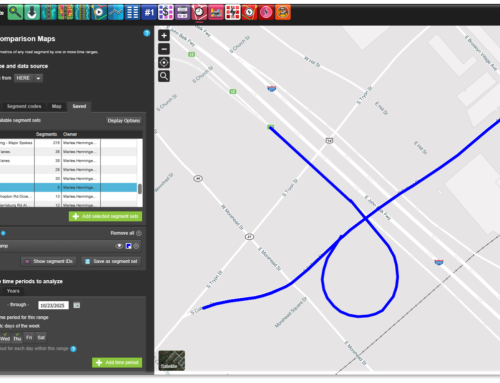
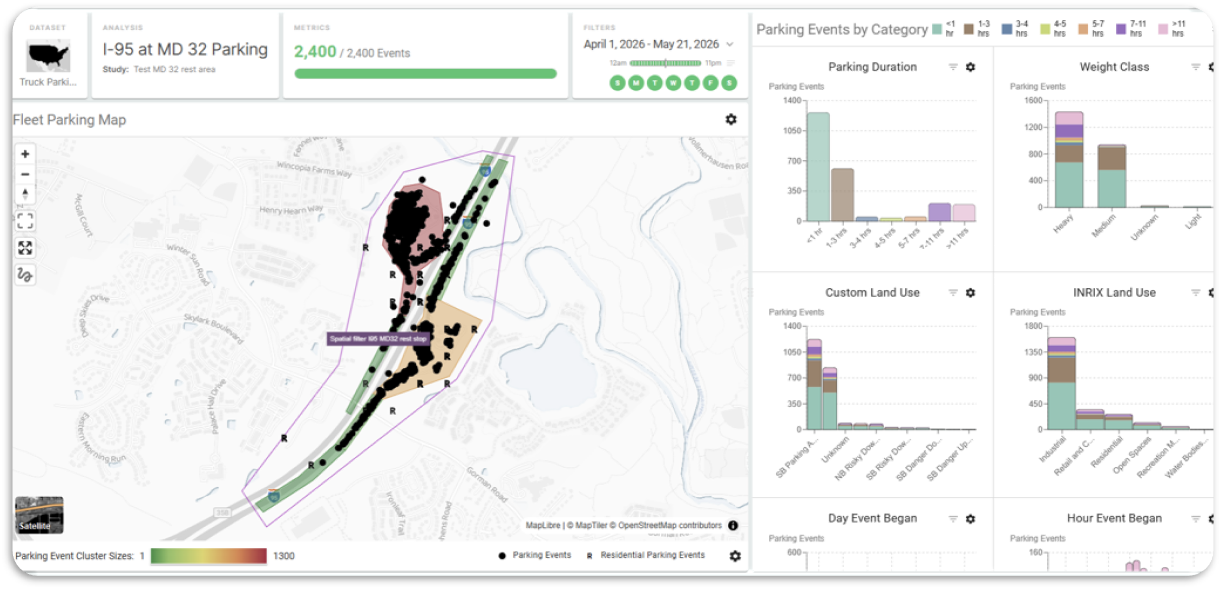
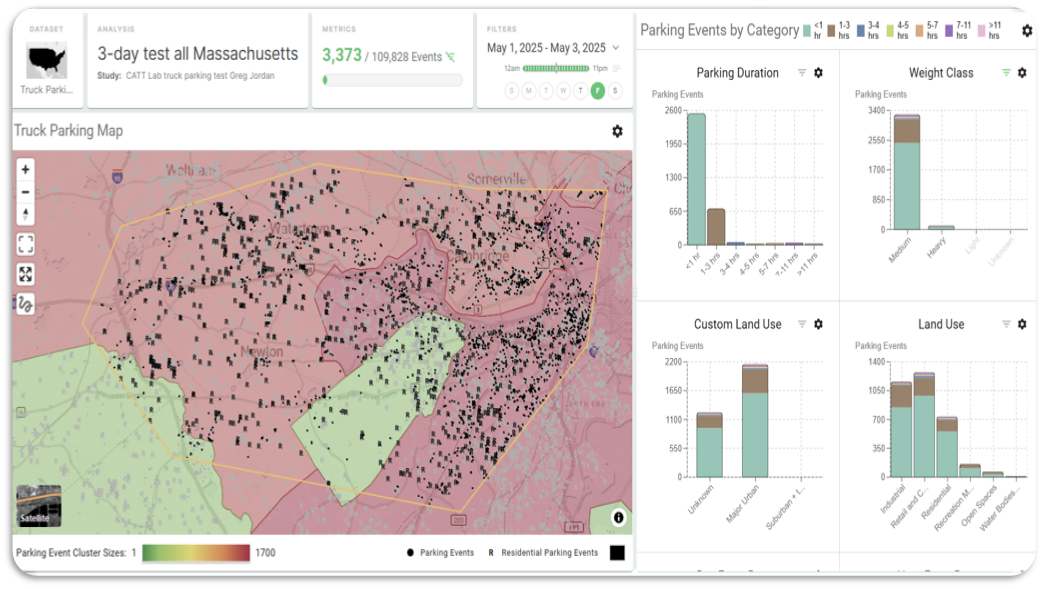
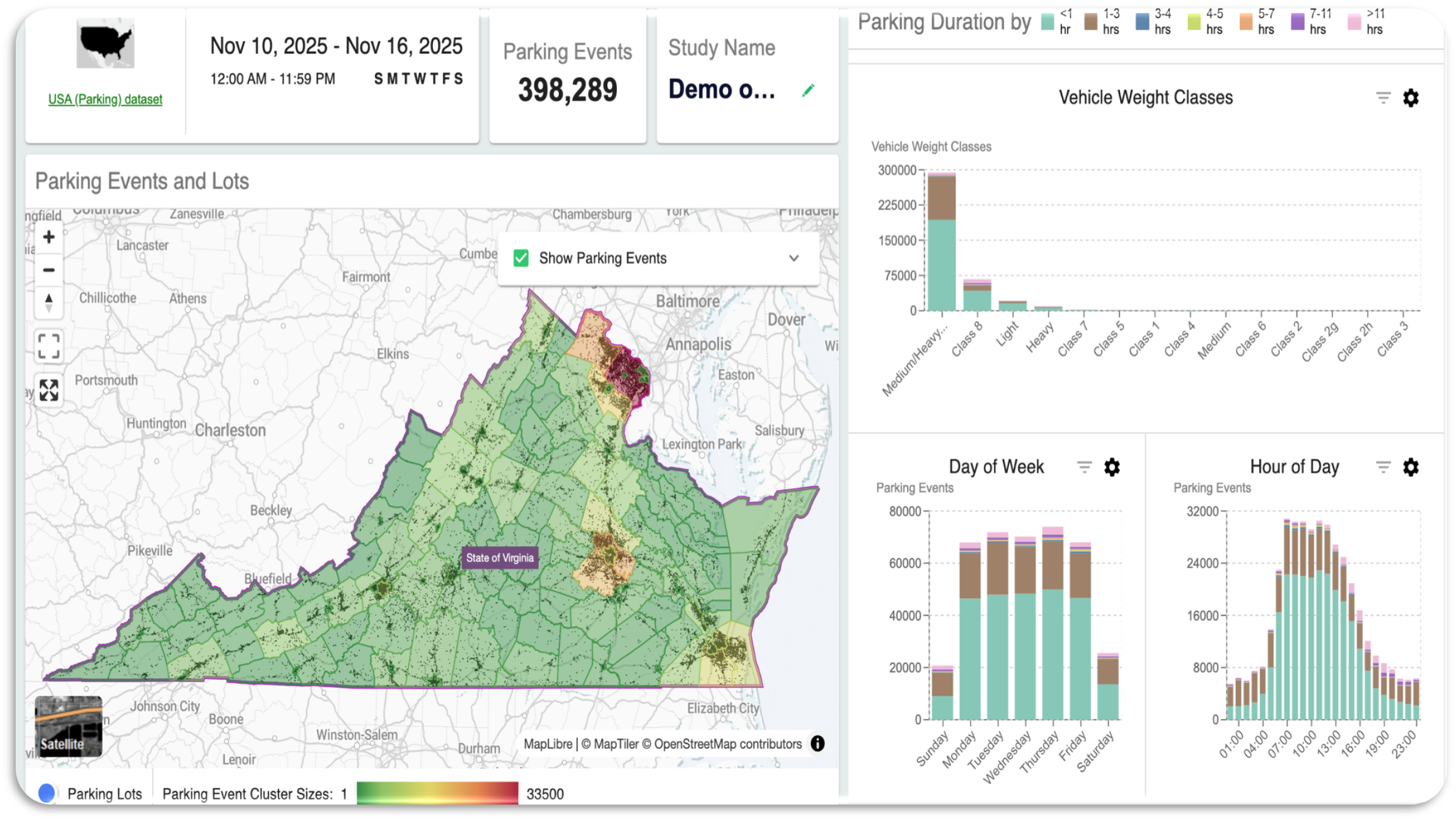
One of the platform’s standout features is its spatial flexibility. Analysts can use user-defined custom polygons to draw specific zones directly on the map, capturing targeted sets of truck parking events. The dashboard’s charts instantly update to reflect these custom selections. This design seamlessly supports both micro-level single-facility analysis—such as studying driver dwell times at a specific Maryland or Massachusetts service plaza—and macro-level statewide exploration. The platform can easily handle massive datasets, such as mapping out approximately 400,000 sampled truck parking events over a single week across the state of Virginia.
Looking Ahead
Looking ahead, the analytics suite is soon expanding to include “previous stop” and “next stop” metrics, giving planners an even more holistic view of freight routing and driver needs. By shedding light on exact parking behaviors and systemic capacity shortages, this new analytics tool is poised to be an essential asset for improving highway safety and modernizing freight analysis on a national scale.